
Technology
Community colleges rush to expand semiconductor training as labor shortage looms US chip industry
By Marcus Chen
Advertisement · Why this ad?
Marcus manages the day-to-day editorial workflow across all brands, coordinating coverage assignments and ensuring editorial standards are met. He previously served as city editor at the Pioneer Press and holds a degree in Political Science from Carleton College.
More from Marcus →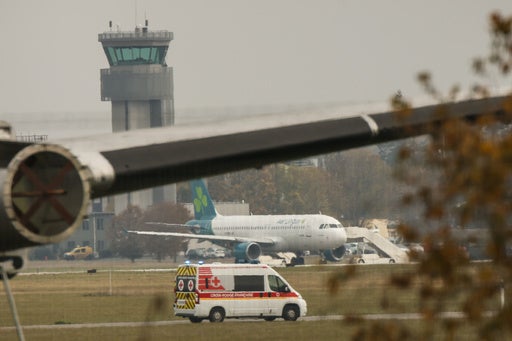
As passengers disembarked from an Aer Lingus flight that had just landed at a military air base in Evreux, France, the tension was palpable. The aircraft, originally en route from Dublin to Rome, had been diverted due to a bomb threat, highlighting the pervasive anxiety surrounding air travel in Europe. The incident on November 5, 2026, marked yet another chapter in a worrying trend of bomb threats targeting multiple flights across the continent, all deemed "malicious hoaxes."
On a single day, more than a dozen flights from cities such as Copenhagen, Dublin, Helsinki, Madrid, Milan, and Warsaw were affected by bomb threats. These threats forced emergency landings and military escorts, with many aircraft redirected to alternative airports for safety checks. Fortunately, inspections revealed no hazardous materials on board any of the flights.
Britain’s Transport Secretary, Heidi Alexander, characterized the threats as “malicious hoax threats,” echoing sentiments from the European Union’s Transport Commissioner, Apostolos Tzitzikostas, who condemned any threats against civilians. He assured the public that investigations were ongoing, and an EU-level information-sharing mechanism for aviation security had been activated.
The incidents come at a time when geopolitical tensions are high, and authorities note an increase in hybrid threats. Recent events, including attacks on supermarket refrigeration systems and drone incursions, have heightened security concerns across Europe. The ongoing threat landscape has left many travelers uneasy, prompting increased vigilance among airlines and security officials.
The Aer Lingus flight that landed in Evreux was not alone in facing such dire circumstances. An Italian air force fighter jet escorted a Finnair flight from Helsinki to Rome after receiving an email threat. The flight, which landed safely at Rome’s Leonardo da Vinci airport, underwent thorough inspections by police bomb disposal experts, who found no explosives.
In a coordinated response, two Ryanair flights bound for Sofia, Bulgaria, were also forced to make emergency landings due to bomb threats. One flight from Copenhagen landed safely at Sofia’s Vasil Levski Airport, while another from London’s Stansted Airport was diverted to Plovdiv. Both flights were escorted through Bulgarian airspace by fighter jets, ensuring the safety of passengers and crew.
Authorities across Europe are grappling with the implications of these threats. The swift response from military and law enforcement agencies demonstrates a commitment to passenger safety, even in the face of what ultimately turn out to be hoaxes. However, the psychological impact on travelers cannot be understated.
For many residents in Edina, the news of bomb threats across Europe raises significant concerns about travel safety. Local families planning trips abroad are left wondering what measures are in place to protect them. The recent bomb threats have led to a heightened sense of caution among travelers, as parents weigh the risks of flying with their children.
Many community members are turning to local travel agencies for advice on how to navigate these uncertain times. Agencies are reporting an uptick in inquiries regarding safety protocols and the reliability of airlines. Families are increasingly opting for road trips or domestic vacations, seeking to avoid the stress associated with air travel.
Despite the chaos, some travelers remain optimistic. “I believe in the resilience of our systems,” said Edina resident and frequent flyer, Sarah Thompson. “While it’s alarming to hear about these incidents, I trust that authorities are doing everything they can to keep us safe.”
Local travel agencies in Edina, such as Edina Travel, have reported a surge in inquiries since the bomb threats. Many clients are seeking reassurance about the safety of their upcoming flights. “We’ve had a lot of people calling in to ask about what safety measures airlines are taking,” said agency manager Mark Jensen. “People want to know how they can feel secure while traveling, especially with families.”
In response, agencies are providing detailed information on airline safety records, current security protocols, and the latest updates from aviation authorities. They are also advising customers on alternative travel options, such as train travel within Europe, which some find less stressful than flying.
The bomb threats that plagued flights on November 5 were not isolated events. Similar hoaxes had surfaced earlier in the week, prompting searches and diversions for several airlines, including Polish airline LOT and Scandinavian Airlines. These earlier incidents set a concerning precedent, leading to increased scrutiny of air travel across Europe.
Authorities reported that a plane headed for Bulgaria had to be diverted to Hungary after receiving a bomb threat while in the air. Thankfully, no injuries occurred during these incidents, but the frequency of such threats raises questions about the motivations behind them. Are they mere pranks, or do they signify deeper issues related to security and public safety?
As investigations continue, the need for robust security measures becomes increasingly apparent. The European aviation sector is under pressure to enhance its protocols, ensuring that such threats are taken seriously while minimizing disruptions for travelers.
Airlines are responding to the surge in bomb threats by reinforcing their security protocols. Aegean Airlines confirmed that two of its flights received bomb threats that were later determined to be baseless, yet the airline implemented all necessary security measures to ensure passenger safety.
Finnair also reported similar experiences, with spokespersons indicating that their flights faced “unfounded hoax bomb scares.” Despite these challenges, the airline industry remains committed to maintaining the highest safety standards. Inspections are now standard practice following any threat, and additional resources are being allocated to ensure thorough checks.
Travelers can expect to see increased security presence at airports, along with potential delays as authorities conduct their investigations. While some may view these measures as an inconvenience, many agree that the priority must be the safety of passengers and crew members.
As the aviation industry grapples with these recent threats, the focus will shift towards enhancing communication and cooperation among European nations. The activation of the EU-level information-sharing mechanism on aviation security is a significant step in the right direction.
Travelers in Edina can expect to see ongoing discussions about safety measures as local officials and community leaders work to address concerns. The importance of strong families and intact communities will play a crucial role in fostering resilience during uncertain times.
In conclusion, while the recent bomb threats targeting flights across Europe were ultimately revealed to be hoaxes, they serve as a reminder of the importance of vigilance in our interconnected world. As authorities continue to investigate these incidents, the commitment to passenger safety remains paramount, ensuring that families can travel with confidence.
The recent spate of bomb threats has not only affected individual flights but has broader implications for the travel industry across Europe. With tourism being a significant part of many European economies, these threats could deter travelers from booking flights and visiting popular destinations.
Local businesses that rely on tourism may feel the impact as well. In Edina, businesses that cater to travelers, such as hotels and restaurants, are already preparing for potential shifts in consumer behavior. “We’re seeing more people interested in local attractions instead of planning trips abroad,” said local business owner Linda Martinez. “It’s important for us to adapt and provide options that keep our community engaged.”
As the situation evolves, it will be crucial for local and national governments to reassure the public and work collaboratively to maintain trust in air travel. The future of European tourism may depend on how effectively authorities can manage these threats and communicate safety measures to the public.
By Marcus Chen

By Katherine Langford

By Marcus Chen

By Katherine Langford